
Run your own AI intake software
Understand what self-hosting gives you and which services still run outside your server.
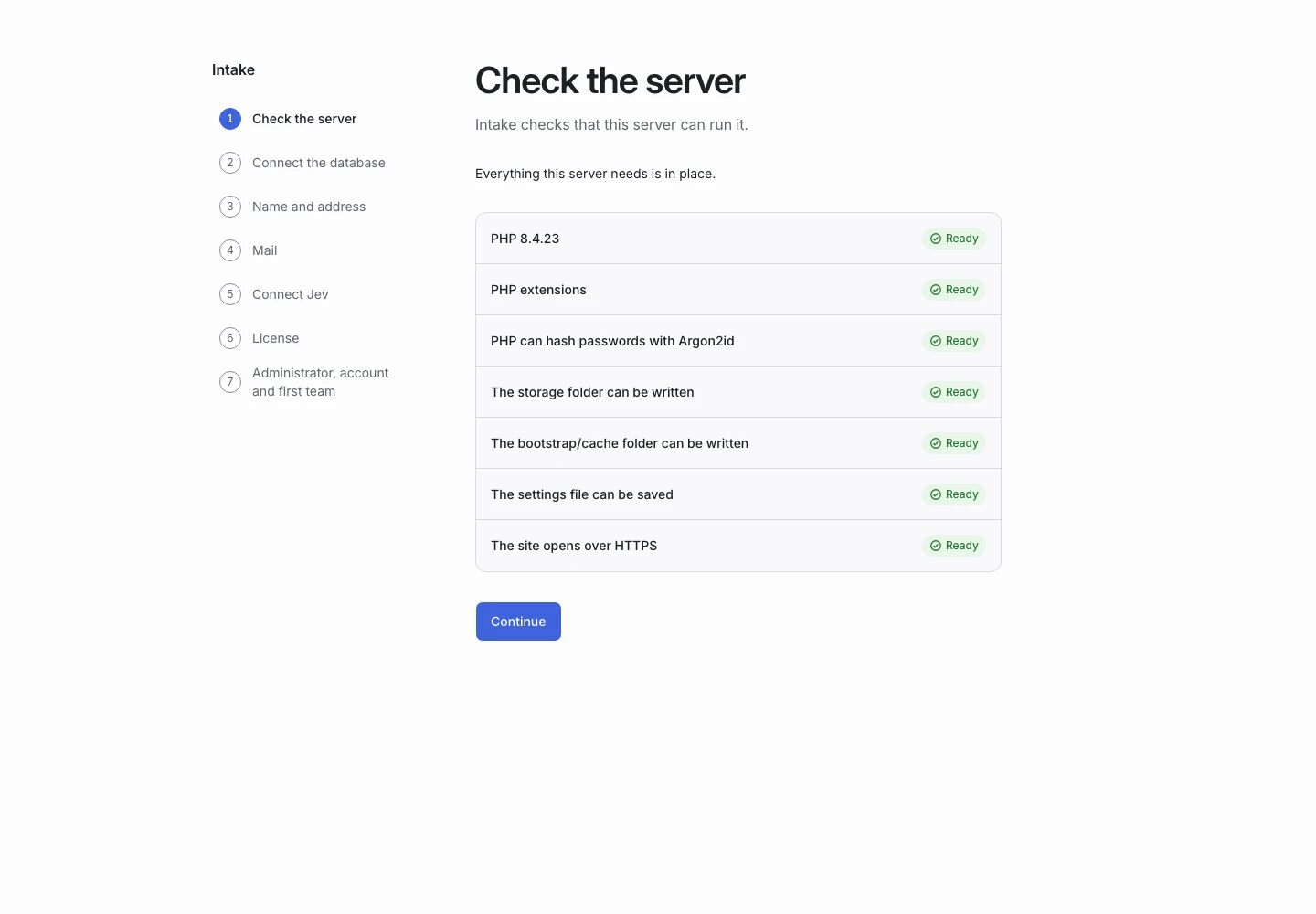
Product screen with sample data. Intake is the previous working name.
Own the application
Self-hosting gives you the application source and control of its server and database. You choose the host, backups, and access arrangements.
ClientStack runs on PHP and MySQL. It needs HTTPS and cron. It does not require Redis or a Node process at runtime.
Account for the AI service
The application sends applicant text and your criteria to TypeSafe when it asks Jev for a judgment. That processing happens outside your server.
Self-hosting does not mean offline AI. Explain the processing to applicants and choose what text your service should collect.
Separate the costs
Plan for the software purchase, hosting, email delivery, and TypeSafe usage. The ClientStack launch offer is a one-time software purchase with one year of updates and product email support. You can keep using the purchased software after that year.
Jev is the only supported AI model. You need your own TypeSafe account for live judgments. See pricing for the current offer, support scope, and managed service enquiries.
Each accepted answer uses one call for all criteria. More follow-up answers mean more calls. Replays with fresh judgments also use the TypeSafe account.
This architecture bounds the work per step. It is not a promise of a fixed latency or per-request cost.
Plan the operation
Assign someone to install updates, check service health, and test restores. Set retention periods for final and abandoned requests.
Keep examples under review because they remain after normal request retention.
Check your host
Use the server checklist, then follow the installation guide. Confirm the release package and upgrade path before using real data.
